
Dump Trailer Rust Prevention and Storage
Dump trailer rust prevention and storage: where rust starts, washing off salt and magnesium chloride, touch-up, coatings, and how to store a trailer for winter.
By Strank Trailers9 min read
The short version
- Rust usually starts where moisture sits: the floor under wet loads, the tops of crossmembers, inside frame tubes, behind fenders, and at hinge pins.
- Magnesium and calcium chloride deicers draw moisture from the air and stay active long after the road dries, so wash the undercarriage after winter driving.
- Touch up chips while they're small. Clean to bright metal, prime, and topcoat.
- Never pressure-wash the hydraulic power unit. Its DC motor usually isn't sealed against water.
- For long storage, keep the battery charged, support the trailer on jack stands under the frame (never the axle), and lubricate exposed moving parts.
On this page
Most dump trailer rust starts in a handful of places where moisture sits: the floor under wet loads, the tops of crossmembers, inside frame tubes, behind fenders, and around hinges. Rust prevention comes down to three habits. Wash off salt and corrosive cargo quickly, fix chips before they spread, and store the trailer so it can dry out. Do those consistently and a decent steel trailer will hold up for many years.
This guide covers where rust starts, how to prevent it during the working season, and how to store a dump trailer over winter or for a long layoff.
Where dump trailers rust first
Dump trailers rust differently from utility or car trailers. The bed is a steel tub that gets loaded with wet, abrasive material, scraped by buckets, and sometimes left full overnight. These are the usual trouble spots:
| Area | Why it rusts | What to look for |
|---|---|---|
| Floor, especially front corners | Wet material and standing water; bucket scrapes remove coating | Pitting, flaking, rust bleeding through seams |
| Floor-to-side seams | Moisture wicks into the joint | Rust streaks running down the outside |
| Crossmember tops | Mud, salt, and debris pack on top and stay wet | Swelling or scaling under the floor |
| Inside tube frames | Condensation and road spray get in and can't get out | Rust weeping from holes or welds |
| Behind fenders and above axles | Tires throw wet grit there | Thick scale, bubbled paint |
| Rear hinge and pins | Bare-metal wear surfaces; water collects in the hinge | Seized pins, rust "dust" at the pivot |
| Battery box | Battery acid fumes and spills | Corroded tray, hold-down, and cable ends |
| Wiring and connectors | Moisture in plugs and grounds | Green corrosion, flickering lights |
Some cargo is far harder on steel than other cargo. Road salt, fertilizer, manure, wet ash, and some demolition debris are corrosive. Wet clay holds water against the floor for days.
Why winter roads are the biggest threat
Many states now use liquid magnesium chloride and calcium chloride as anti-icers, along with rock salt (sodium chloride). These chlorides are hygroscopic, which means they pull moisture out of the air. They can keep a trailer's underside damp even when the road looks dry.
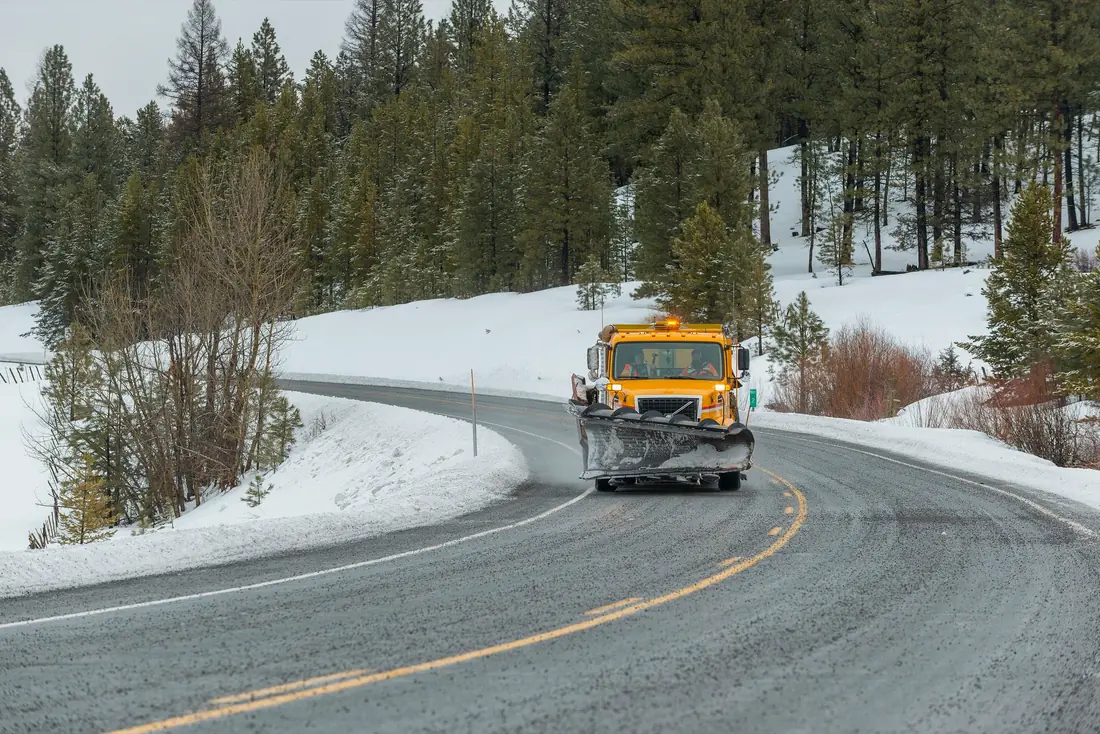

An industry analysis in Trailer/Body Builders covered a Colorado DOT study of magnesium chloride and sodium chloride effects on vehicle components. It also cited an American Trucking Associations Foundation survey in which 72% of Colorado trucking companies reported more equipment wear after the state started using magnesium chloride. The article also notes that magnesium chloride stays moist at relative humidity above about 27%. The same article noted that the Colorado DOT study found the corrosion inhibitors added to magnesium chloride weren't effective. The practical takeaway: treat winter road film as active corrosion, not just dirt.
Habits that prevent rust during the working season
Don't leave wet material in the bed
Empty the trailer at the end of the day when you can, especially in freezing weather, when wet loads can also freeze to the floor. A load left overnight holds moisture against the steel for hours. It can also freeze in place and become a tip-over hazard when you dump it, as explained in dump trailer safety.
Wash it regularly, but be careful near the pump
- Wash the bed and undercarriage after hauling salt, fertilizer, manure, ash, or wet clay.
- Rinse out the corners of the bed and the gate hinges. Material packs there.
- Keep water away from the hydraulic power unit. DLH Fluid Power's owner's manual says never to pressure-wash or hose down the power unit, because the DC motor isn't sealed and long moisture exposure causes early motor failure. DLH recommends spraying light amounts of cleaner or degreaser and drying with compressed air or a rag.
- Keep the battery box lid closed while washing.
Touch up chips while they're small
A dump trailer's paint or powder coat takes a beating. Gravel and buckets chip it from the inside, and road debris chips it from below. Each chip is where rust starts, and on a painted surface, rust creeps outward underneath the coating.
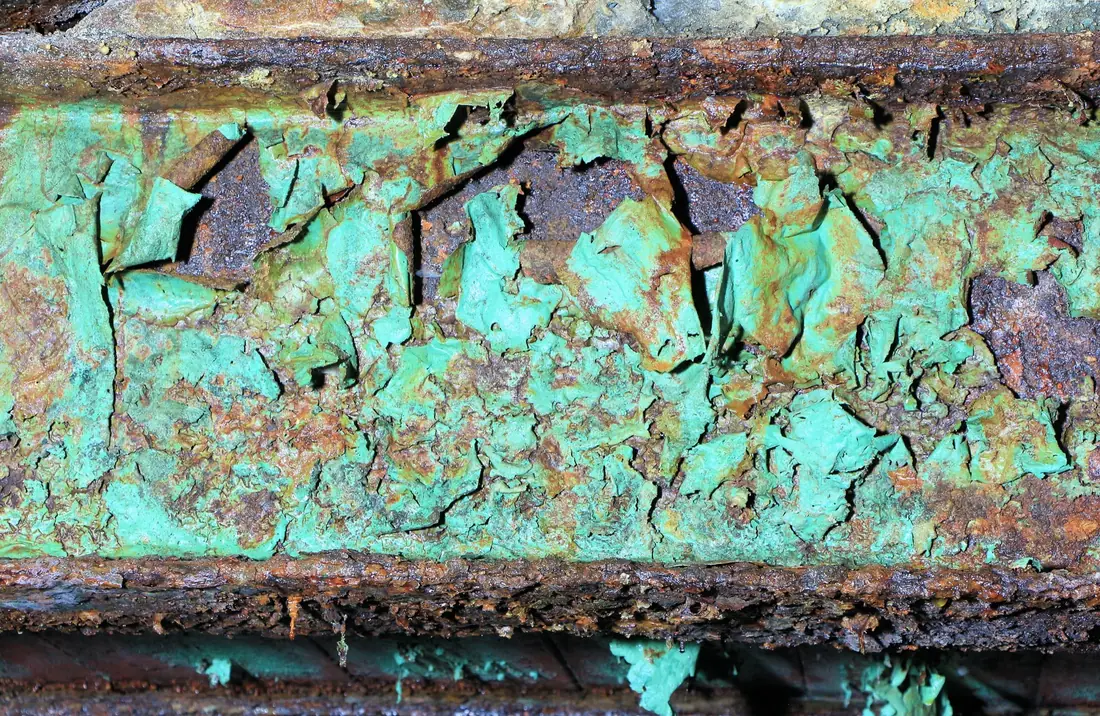

- Wire-brush or sand the chip and a little of the surrounding area down to bright metal.
- Clean with a wax-and-grease remover or solvent.
- Apply a rust-inhibiting primer, or a rust converter on light surface rust you can't fully remove.
- Topcoat with a compatible paint. Many trailer makers sell touch-up paint matched to their color.
Do a quick walkaround once a month and touch up anything new. It's a 20-minute job when it's a few chips, and a weekend job once it's a few square feet of scale.
Keep moving parts greased
Grease does more than lubricate. Fresh grease pushes water out of hinge pins, cylinder pivots, and scissor joints. The industry-standard owner's manual calls for greasing the bed hinge and gate hinges every month. That's covered in the dump trailer maintenance checklist.
Protect the electrical system
- Put dielectric grease on plug pins, junction connections, and battery terminals.
- Keep the trailer plug capped or stowed when it's unhooked.
- Clean and tighten grounds. Corrosion at the ground is a common reason for flickering lights and slow pumps.
Consider undercoating and cavity protection
Some owners spray oil-based or wax-based rust inhibitors on the underside and inside frame tubes. These products creep into seams and displace moisture. They need reapplying, often yearly, and they collect dirt. Avoid coating brake components, and keep products off brake linings and magnets. Dexter's manual warns against getting grease or oil on them.
Coatings: what you start with matters
The coating a trailer leaves the factory with sets how much maintenance it needs.
| Coating | Strengths | Weaknesses |
|---|---|---|
| Wet paint (enamel/urethane) | Easy to touch up; lowest cost | Thinner film; chips easily; rust creeps under it |
| Powder coat | Thicker, harder film; good chip resistance when done over a properly blasted and pretreated surface | Hard to blend repairs; if prep was poor, rust creeps under it in sheets |
| Hot-dip galvanized | Zinc coats inside and out, including tube interiors and edges; zinc protects small scratches | Higher cost; fewer models offer it; paint over galvanizing needs special prep |
The American Galvanizers Association publishes a "time to first maintenance" chart for hot-dip galvanized steel. It shows decades of protection in atmospheric exposure. That chart covers atmospheric conditions (rural, industrial, marine), not repeated road-salt splash and abrasive loads, so don't expect those numbers on a dump trailer. The relative advantage still holds. For a full comparison, see powder coat vs. paint vs. galvanized.
How to store a dump trailer for winter or a long layoff
Dexter's axle manual and the industry-standard dump trailer owner's manual both include storage procedures. Here they are combined with dump-specific steps.
Before storage
- Wash and dry it thoroughly, including the undercarriage. Don't put a salty trailer away for the winter.
- Touch up chips and bare metal. Rust doesn't stop while the trailer sits.
- Store with the bed fully down. Don't leave the bed raised on the hydraulics or on the prop. Lowering it also returns fluid to the reservoir, which is the right time to check the level.
- Check the hydraulic fluid with the bed down. If it's milky (water contamination), change it before storage.
- Grease every fitting. Bed hinge, cylinder pivots, scissor joints, gate hinges, jack, coupler. Dexter's manual says to lubricate exposed mechanical parts like the hitch and suspension before storage.
- Take care of the battery. Dexter says to remove the breakaway battery, store it indoors, and charge it at least every 90 days. Do the same with the dump battery, or keep it on a smart maintainer. The industry owner's manual warns that a discharged battery can freeze and break.
- Get weight off the tires. Dexter recommends jacking the trailer and supporting it on jack stands under the frame, so the tires carry no weight. Never place stands on the axle tube or equalizers.
- Protect the tires. Cover them to block sunlight, because UV and ozone age rubber even when the tire isn't rolling. Advice on storage pressure varies. The industry owner's manual says to inflate to the maximum rated pressure, while Carlisle's trailer tire guide suggests reducing pressure for storage. With the trailer on jack stands, this matters less. Follow your tire maker's guidance, and reset to the running pressure before towing.
- Roll up and stow the tarp dry, so it doesn't mildew or freeze to the bows.
- Cap the trailer plug and block rodent access to wiring where you can.
Where to store it
- Best: Indoors or under a roof, on concrete or gravel, with airflow.
- Okay: Outdoors on gravel or pavement, with the tongue slightly raised so rain drains out the back of the bed.
- Avoid: Bare dirt or grass. Moisture comes up from the ground and rusts the undercarriage and brakes from below. Avoid tight covers that trap humidity against the steel.
Bringing it out of storage
Dexter publishes a post-storage inspection for axles. The key points:
- Inspect the suspension for wear, and check hanger, shackle, and U-bolt nut torque.
- Pull the hubs or drums. Check brake linings, drums, and magnets for wear or scoring, and remove rust from braking surfaces with fine emery cloth.
- Inspect the seals, lubricate the bearings, and reinstall and adjust the hubs.
- Mount the wheels and torque them to spec, then re-check torque at 10, 25, and 50 miles if any wheel came off.
On the dump side, fully charge the battery, cycle the bed empty a few times to check for smooth lifting and leaks, and test all lights and brakes before the first loaded trip.
Repairing rust that's already there
- Surface rust: Wire-brush, treat, prime, paint.
- Scale and pitting on the floor: Grind or needle-scale to sound metal, check the remaining thickness, then prime and coat. A bedliner-type coating can help in the bed, but only over clean, sound steel.
- Rust-through, or rust at structural welds, hinge mounts, or crossmembers: That's a structural repair. Have a qualified welder assess it. Patching over a weakened crossmember or hinge mount hides the problem without fixing it.
For how rust affects a trailer's overall life and resale value, see how long dump trailers last.
The bottom line
Rust is a moisture problem. Don't let wet loads sit, wash off salt and deicer film promptly, and fix chips before they spread. Store the trailer bed-down, dry, off its tires, and with the battery charged. Keep water away from the pump motor, and grease every pivot before the trailer goes into storage.
Frequently asked questions
How do I keep my dump trailer from rusting?
Don't leave wet material sitting in the bed. Wash off salt, fertilizer, and deicer residue promptly. Touch up chips before they spread, and keep pivots greased. Store the trailer bed-down, ideally under cover, with the drain paths clear.
Should I store my dump trailer with the bed up or down?
Down. A bed stored raised stresses the hydraulic system and can drop if the system bleeds off. If you raise it to let it drain or to work on it, use the safety prop and only with an empty bed, then lower it for storage.
Does magnesium chloride hurt trailers?
Yes. Magnesium and calcium chloride deicers are hygroscopic, meaning they pull moisture from the air and keep metal wet longer than plain rock salt does. A Colorado DOT study found that the corrosion inhibitors added to magnesium chloride didn't work well. Wash it off as soon as you can.
Is a galvanized dump trailer worth it?
Hot-dip galvanizing protects steel inside and out, including edges and seams that paint can miss, so it usually outlasts paint in salt and wet conditions. It costs more up front and isn't offered on every model. If you haul corrosive material or drive on treated winter roads, it's worth pricing.
Share this guide
Link to this guide
Writing about dump trailers? You're welcome to quote this guide and link to it. Copy whichever format you need.
- URL
- https://stranktrailers.com/guides/dump-trailer-rust-prevention-and-storage
- HTML link
- <a href="https://stranktrailers.com/guides/dump-trailer-rust-prevention-and-storage">Dump Trailer Rust Prevention and Storage</a> (Strank Trailers)
- Citation
- Strank Trailers. "Dump Trailer Rust Prevention and Storage." stranktrailers.com, October 28, 2026. https://stranktrailers.com/guides/dump-trailer-rust-prevention-and-storage
Keep reading
Ownership · 11 min read
Dump Trailer Safety: Dumping, Tipping, and Power Lines
Dump trailer safety: avoiding tip-overs when dumping, OSHA power line clearances, using the bed safety prop, sticky and frozen loads, chocks, and unhitching.
Ownership · 9 min read
Dump Trailer Maintenance Checklist
A dump trailer maintenance checklist with pre-trip, weekly, monthly, and annual tasks: lug nut torque, bearings, brakes, hydraulic fluid, grease points, rust.
Specs · 9 min read
Powder Coat vs. Paint vs. Galvanized
Powder coat vs. paint vs. galvanized dump trailers: how each finish is applied, why surface prep matters most, where rust starts first, and what road salt does.